Mastering Ultra-Low Temperatures: A Deep Dive into Cryogenic Gate and Globe Valves
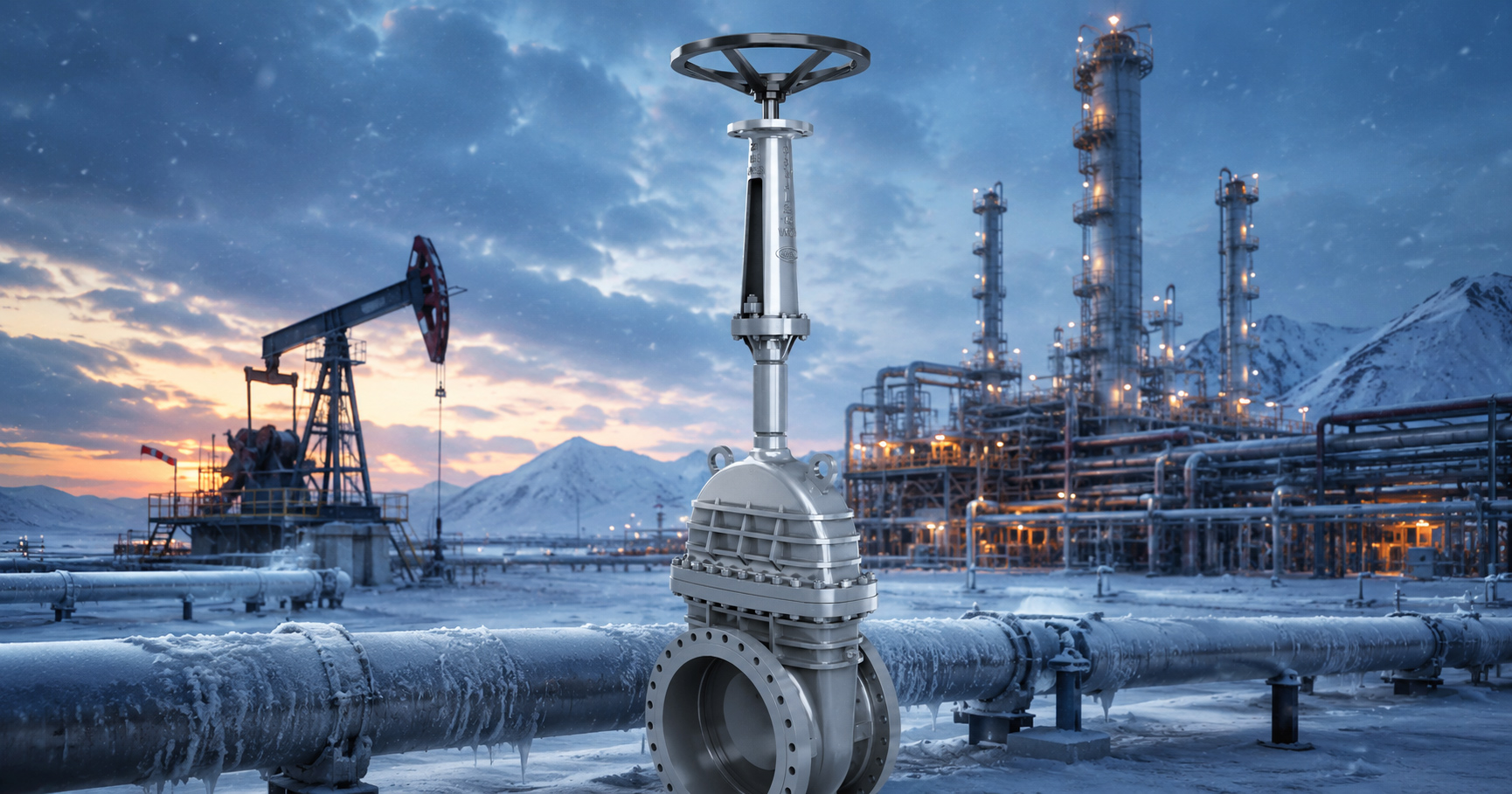
Handling fluid media at ultra-low temperatures—often dropping well below −100 °C—presents some of the most punishing environments in modern industrial engineering. Whether it is Liquefied Natural Gas (LNG) processing, rocket propulsion, or the rapidly growing green and blue hydrogen infrastructure, cryogenic systems leave absolutely zero room for error. Ordinary industrial valves fail instantly in these environments; cold temperatures cause materials to contract, brittle fractures to occur, and standard seals to freeze and shatter.
To prevent hazardous leaks and ensure continuous uptime, systems rely on specialized cryogenic valves. Among the most critical players in these sub-zero fluid networks are Cryogenic Gate Valves and Cryogenic Globe Valves.
Let’s explore how these high-performance valves work, how they protect your pipeline infrastructure, and how to choose the right one for your specific application.
The Secret Weapon of Cryogenic Valves: The Extended Bonnet
Before looking at the functional differences between gate and globe designs, they share one fundamental, safety-critical design feature: the extended bonnet.
In standard industrial applications, a valve’s stem packing (the seal that prevents fluid from leaking out along the moving stem) sits relatively close to the valve body. In cryogenic services, if fluid that cold gets near the packing, it freezes the moisture in the air. This forms ice crystals that chew through the seals, causing catastrophic leaks and seizing up the valve’s movement.
An extended bonnet acts as a physical distance buffer. By lengthening the valve neck, it raises the stem packing away from the freezing fluid pipeline. The cold liquid inside the valve vaporizes as it travels up the neck, forming a natural insulating gas pocket. This keeps the packing area warm enough to stay ice-free, ensuring smooth operation and tight fugitive emission control.
Cryogenic Gate Valves: Engineered for High-Flow Isolation
If your process line requires a reliable "on/off" switch that won't disrupt flow rates during normal operation, a cryogenic gate valve is the primary solution.
[Flow State] ──> Full Bore Open ──> Minimum Pressure Drop (ΔP close to 0)
Oswal Industries’ Cryogenic Gate Valves are specifically designed to provide safe, bubble-tight isolation for full-bore applications. When fully opened, the internal gate retracts entirely out of the flow stream, creating minimal flow resistance and a negligible pressure drop.
Key Specifications & Design Highlights:
| Size Range | 2” to 36” |
|---|---|
| Pressure Classes | 150#, 300#, 600# |
| Design Standards | API 600, API 16.34 |
| Testing & Quality Assurance | Tested rigorously to API 6D, API 598, and BS EN 12266-1. |
| Sealing Options | Available with solid or flexible wedges to prevent thermal binding (where the wedge gets stuck in the seats due to material contraction from extreme cold). |
Cryogenic Globe Valves: Precision Throttling and Control
While gate valves are great for full-flow or complete shut-off scenarios, they should never be used to modulate or throttle flow. Trying to run a gate valve partially open in a high-velocity cryogenic line causes destructive vibrations and rapid seat wear.
When you need to adjust fluid flow rates or require a highly secure, repetitive shut-off mechanism, you turn to a Cryogenic Globe Valve.
Oswal’s cryogenic globe valves use a guided disc architecture that changes the fluid's direction as it passes through the valve body. This design allows for smooth, linear throttling characteristics, giving operators precise control over the movement of cryogenic media.
Key Specifications & Design Highlights:
- Size Range: 2” to 14”
- Pressure Classes: 150#, 300#, 600#
- Design Standards: BS 1873, API 623, and BS 6364 / ISO 28921 (the gold standard for low-temperature operation testing).
- Testing Standard: API 598
- Trim Variety: Soft-faced or hard-faced trims can be customized based on whether you are managing clean cryogenic gases or more erosive/sour media.
Material Science at Super-Zero Temperatures
You cannot build a cryogenic valve out of standard carbon steel; the metal turns brittle and can fracture under pressure. Oswal utilizes high-grade, low-temperature metallurgy to ensure high impact strength and long-term durability.
Depending on your specific chemical media, temperature profile, and environmental corrosion factors, you can configure both gate and globe valves using a versatile matrix of materials:
| Material Type | Common Applications / Suitability |
|---|---|
| LTCS / Low Temp Alloy Steel | Cost-effective option for basic low-temperature environments. |
| Stainless Steel (e.g., 316/316L) | The industry standard for excellent impact toughness at extreme sub-zero levels. |
| Duplex & Super Duplex | High mechanical strength paired with excellent chloride stress corrosion resistance. |
| Exotic Alloys (Inconel, Monel, Hastelloy) | Reserved for severe service applications combining cryogenic temperatures with highly corrosive or sour process chemicals. |
Application Summary: Gate vs. Globe
To quickly determine which valve belongs where in your plant infrastructure, use this simple rule of thumb:
- Choose a Cryogenic Gate Valve if: You need a high-capacity line where the valve stays completely open or completely closed for long periods (e.g., main storage tank terminal isolation or cross-country transfer lines), and pressure drops must be kept to an absolute minimum.
- Choose a Cryogenic Globe Valve if: You are regulating filling lines, bypass systems, or anywhere you need to frequently modulate flow rates with reliable, repeatable, tight shut-off control.
Why Partner with Oswal Industries?
With manufacturing infrastructure backed by an advanced in-house foundry, design engineering, and dedicated cryogenic testing facilities, Oswal Industries manages the quality stack from raw metal melt to final certified valve testing. This end-to-end oversight ensures that every gate and globe valve handles sub-zero thermal cycling smoothly, preventing fugitive emissions and securing your operations.