The Ultimate Guide to Triple Offset Butterfly Valves: Innovation, Uses, and Specifications
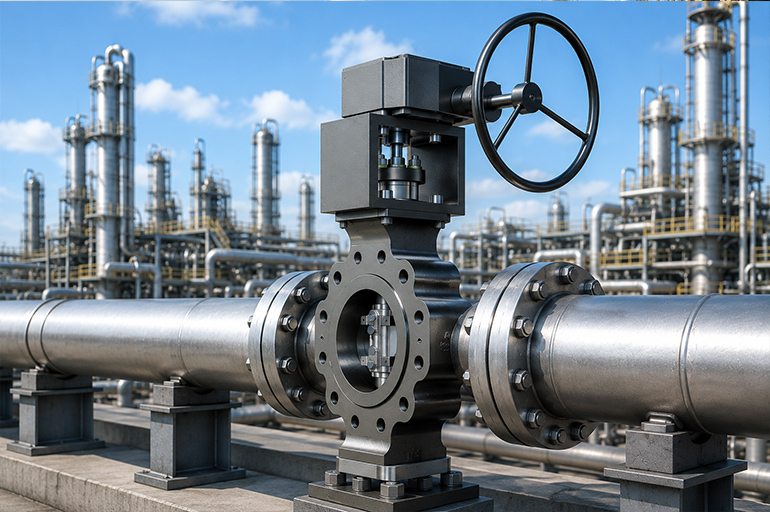
In the world of industrial flow control, finding a valve that offers zero leakage, minimal wear, and exceptional durability under extreme conditions can be a challenge. Standard butterfly valves have long been celebrated for their lightweight design and cost-effectiveness, but traditional designs often struggle in high-pressure and high-temperature environments.
Enter the Triple Offset Butterfly Valve (TOBV)—a engineering masterpiece designed to bridge the gap between low-cost quarter-turn valves and heavy-duty gate or globe valves.
In this comprehensive guide, we will explore the overview, design variations, applications, specifications, and materials of construction for Triple Offset Butterfly Valves, and where you can source the highest quality valves for your industrial needs.
1. Overview: What is a Triple Offset Butterfly Valve?
To appreciate the Triple Offset Butterfly Valve, it helps to understand its geometry. Unlike a concentric butterfly valve where the shaft is centered in the disc and valve body, a triple offset valve utilizes three distinct offsets to achieve a frictionless, metal-to-metal seal.
The Three Offsets Explained:
- First Offset: The shaft is located behind the centerline of the sealing surface. This allows for a continuous, uninterrupted sealing surface around the entire disc.
- Second Offset: The shaft is displaced to one side of the pipe/valve centerline. This creates a cam-like, eccentric motion as the valve opens and closes, pulling the disc away from the seat almost immediately upon opening.
- Third Offset (The Geometric Innovation): The seat cone axis is inclined or offset from the valve centerline. This creates a right-angled, cone-in-cone sealing profile.
Why does this matter? The combination of these three offsets ensures that the disc only contacts the seat at the final point of closure (0 degrees). This completely eliminates friction and rubbing during operation, minimizing wear and tear, dramatically extending the valve's lifespan, and ensuring a true bubble-tight (zero-leakage) shutoff.
2. Types of Butterfly Valves: Where Does the TOBV Fit?
To understand why the triple offset design is so revolutionary, it’s essential to look at the three primary categories of butterfly valves:
- Concentric (Zero Offset) Butterfly Valves: The most basic design, where the shaft is perfectly centered. The disc is always in contact with the rubber sleeve/seat during operation, leading to high friction. These are typically limited to low-pressure, low-temperature, and non-hazardous applications (like water utility systems).
- Double Offset (High-Performance) Butterfly Valves: The shaft is offset in two planes. This allows the disc to lift off the seat quickly, reducing wear. They usually employ PTFE or polymer seats and work well in medium-pressure systems.
- Triple Offset Butterfly Valves (TOBV): Featuring the third angular offset and utilizing a metal-to-metal seat. They are purposely engineered for bi-directional, zero-leakage isolation in critical, severe-service applications where soft-seated valves would fail.
3. Uses and Applications of Triple Offset Butterfly Valves
Because of their robust design and ability to handle extreme environments, TOBVs are widely used across heavy industries:
- Oil & Gas (Upstream, Midstream, Downstream): Used in refining, offshore platforms, LNG (Liquefied Natural Gas) processing, and storage facilities where hydrocarbon leakage poses severe safety risks.
- Power Generation: Highly effective in steam isolation, cooling water systems, and condensate applications.
- Chemical and Petrochemical Plants: Ideal for handling corrosive chemicals, volatile organic compounds (VOCs), and high-temperature polymers.
- District Heating and Cryogenics: Capable of operating flawlessly in sub-zero cryogenic environments (like liquid nitrogen or oxygen processing) as well as superheated steam lines.
- Water and Wastewater Treatment: Used in high-pressure water transmission lines where longevity and minimal maintenance are priorities.
4. Key Technical Specifications
When procuring or engineering a pipeline system, Triple Offset Butterfly Valves are usually evaluated based on the following industry standards and technical specifications:
- Size Range: Generally available from 2” up to 84” (and larger custom sizes depending on the manufacturer).
- Pressure Ratings: Typically rated for ASME Class 150, 300, 600, and up to Class 900 or 1500 for specialized applications.
- Temperature Ranges: Exceptionally versatile, capable of handling temperatures from cryogenic levels (-196°C / -320°F) up to severe heat (over 600°C / 1112°F).
- Design Standards: Manufactured according to API 609, ASME B16.34, and ISO 5752.
- Testing & Fire Safety Standards: Tested under API 598 (Valve Inspection and Testing) and certified fire-safe under API 607 / ISO 10497.
- Body Styles: Available in Wafer, Lugged, Flanged, and Butt-Weld configurations to suit specific pipeline layouts.
5. Materials of Construction (MOC)
The severe-service environments where TOBVs operate demand premium metallurgy. The components must resist corrosion, erosion, thermal expansion, and mechanical stress.
- Valve Body & Disc: Common materials include Carbon Steel (WCB, LCC for low temperatures), Stainless Steel (CF8, CF8M, CF3M), and Duplex/Super Duplex Stainless Steel for marine or highly corrosive environments. For specialized chemical applications, exotic alloys like Hastelloy, Inconel, and Monel are utilized.
- Valve Shaft/Stem: Requires high tensile strength and wear resistance. Typically made of 17-4 PH Stainless Steel, XM-19, or Inconel 718.
- Seat and Seal Ring: The seat is generally integrated into the body using hard-facing materials like Stellite 6 to resist erosion. The disc seal ring is often a laminated structure made of layers of Stainless Steel and Graphite, or solid metal rings for pure metal-to-metal severe service.
Looking for the Best Triple Offset Butterfly Valve Manufacturer in India?
When managing critical processes, the quality of your valves directly impacts plant safety, efficiency, and uptime. Sourcing your flow control solutions from a trusted, certified manufacturer is paramount.
For world-class engineering, exceptional build quality, and rigorous adherence to international standards, Oswal Valves stands out as a premier industry leader. As one of the best Triple Offset Butterfly Valve manufacturers in India, Oswal Valves leverages state-of-the-art manufacturing facilities, premium materials of construction, and precision testing to deliver zero-leakage valves tailored to your toughest industrial challenges.
Explore their robust product lineup, customize your technical specifications, and elevate your pipeline efficiency by visiting the official Oswal Valves Triple Offset Butterfly Valve Product Page.